

There was a time when the table centerpiece belonged almost exclusively to flowers. A generous bouquet, placed at the centre of a dining table, was considered the final flourish of hospitality. Today, however, the language of interiors has evolved. The modern table centerpiece has become something far more architectural, far more considered.
Design-led spaces now treat the table as a stage for form, material, and proportion. In restaurants, boutique hotels, boardrooms, and private residences alike, the centre of the table has become an opportunity to communicate design intelligence. A thoughtfully composed arrangement of sculptural objects offers presence, texture, and rhythm to the room.
For architects and hospitality curators, the centerpiece is now part of spatial storytelling. It frames conversation, guides the eye, and establishes the tone of a table long before the first course is served. In this context, sculptural metal, cast forms, and objects with material depth have replaced fleeting arrangements.
The most compelling decorative centerpieces today behave like miniature architecture. They anchor a table with intention and lend a space a sense of permanence.
At Taho Living, this philosophy finds its natural expression. Working in cast metal and elemental materials, the studio approaches the centerpiece as an object of design rather than ornament.
The Center of the Table as Design Territory
In well-composed interiors, the centre of a table holds visual gravity. Designers consider its scale carefully. A piece must command attention while allowing conversation to flow easily across the table.
In hospitality environments, the choice of centerpiece carries practical weight as well. Hotels and fine dining restaurants prefer objects that hold their form through service cycles. Corporate meeting tables benefit from arrangements that communicate polish and clarity rather than distraction.
A refined home table styling approach follows similar principles. The arrangement must interact with the surrounding architecture. Stone surfaces, metal accents, and wood textures each demand different visual companions.
Several characteristics define the modern centerpiece in design-forward interiors:
-
Sculptural presence that reads from every angle
-
Materials that develop character over time
-
Forms that echo architectural geometry
-
Objects that allow flexible arrangements
The contemporary table centerpiece functions like a composed vignette. Each piece holds its own identity, yet the grouping feels deliberate.
Material as the Language of Decorative Centerpieces
Material choice now defines the character of decorative centerpieces more than colour or ornament. Cast metals, stone, and textured surfaces introduce depth that flowers cannot sustain over time.
Taho Living’s approach centres on metals that hold memory. Cast aluminium, bronze tones, and hand-finished surfaces respond beautifully to ambient light. They evolve gradually as they interact with the environment.
This relationship between object and space is particularly valuable in hospitality design. A restaurant table receives changing light throughout the day. Morning sunlight reveals texture. Evening lighting brings warmth to metal finishes. The centerpiece becomes part of this daily choreography.
When designers specify sculptural trays and platters instead of floral arrangements, the table gains a sense of compositional clarity. The result reads as design rather than decoration.
Sculptural Objects That Shape the Modern Table Centerpiece
Taho’s objects lend themselves naturally to layered compositions. Each piece carries a clear silhouette and material integrity, allowing designers to build centre arrangements that feel grounded and intentional.
Liva Tray
The Liva Tray offers a graceful starting point for a table centerpiece. Cast in aluminium and shaped like an organic leaf, its textured surface captures delicate veins and contours. The graphite finish introduces depth that complements stone tables and wood surfaces alike.
Placed at the centre of a dining table, the tray creates a sculptural base for smaller objects. In boutique hotels, it often holds curated accents such as polished stones or small votives. The form reads beautifully from above, making it particularly effective on round or square tables.

Kyra Box
Every composed centerpiece benefits from an object with vertical presence. The Kyra Box offers exactly that. Crafted from cast aluminium with a brass antique finish, the piece carries a sense of permanence that elevates home table styling as well as hospitality environments.
The proportions allow it to function as both a decorative element and a practical container. Restaurants often use it to house specialty condiments or curated service elements. In corporate boardrooms, it becomes a refined storage object that maintains visual discipline across the table.
Its form communicates craftsmanship. The finish develops character as it interacts with the environment, giving the object a living quality over time.
Vritt Tray
Long tables benefit from horizontal composition. The Vritt Tray, with its elongated silhouette and brass antique finish, provides a sense of movement along the table’s axis.
In hospitality settings, the tray serves as a sophisticated foundation for layered decorative centerpieces. Designers often place small sculptural objects along its length, creating rhythm without visual clutter.
For larger dining tables or conference spaces, this approach creates a centerpiece that stretches elegantly through the centre while maintaining clear sightlines for guests.

Niva Platters
A well-styled centerpiece often includes variation in scale. The Niva Platters introduce this dimensional quality beautifully. Available in finishes such as black nickel, nickel, and brass antique, the platters form a natural composition when grouped together.
Designers appreciate the versatility of these pieces. A single platter creates a clean visual anchor. A cluster forms a layered arrangement that feels curated yet effortless.
For home table styling, they serve equally well as sculptural objects or functional serving elements. Their shallow form allows them to integrate seamlessly into contemporary dining settings.

Kirkos Platter Set
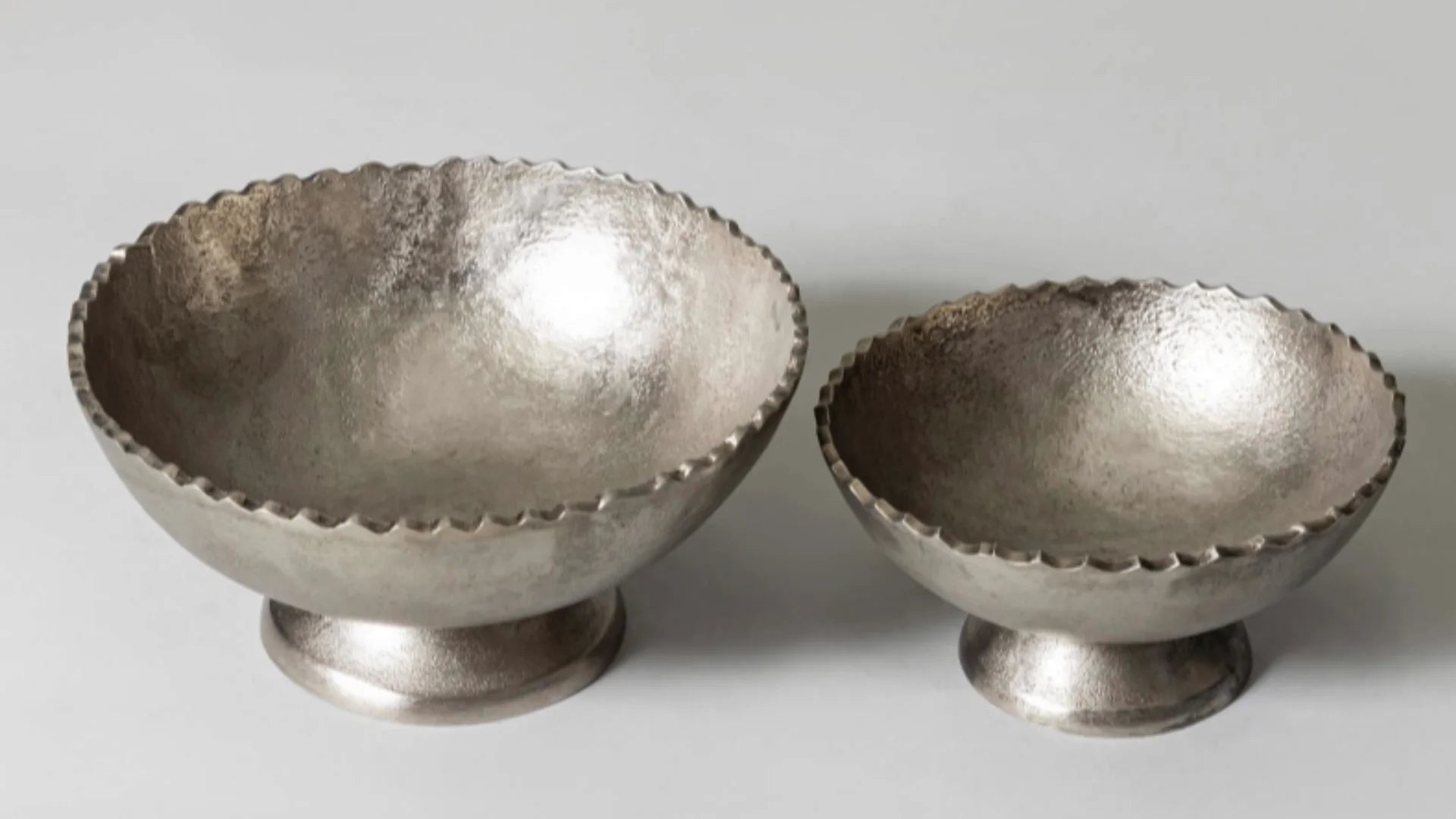
The Kirkos Platter set brings sculptural depth to a centerpiece arrangement. Each piece carries subtle variation in form and finish, giving the composition an organic character.
Placed together, the platters form a balanced grouping that commands attention across larger tables. In restaurant environments, designers often use them to create dynamic centre arrangements that remain stable through service.
Their circular form also echoes architectural motifs frequently found in modern interiors, reinforcing the spatial language of the room.
Centerpieces in Hospitality and Corporate Spaces
The conversation around table centerpiece design becomes especially interesting in professional environments.
Boutique hotels often use centre arrangements to reinforce brand identity. A table styled with sculptural metal pieces conveys permanence and craftsmanship. It complements interiors built around stone, marble, and textured materials.
Restaurants benefit from centrepieces that remain consistent through service while still contributing to the atmosphere. Cast metal trays and platters provide durability while maintaining aesthetic clarity.
Corporate spaces approach the table differently. Meeting tables must maintain visual calm. Sculptural decorative centerpieces offer presence without distraction. A carefully placed tray or platter arrangement communicates attention to detail and thoughtful design leadership.
Across these settings, the centerpiece becomes part of the architectural narrative of the space.
Composing a Modern Table Centerpiece
Designers approaching home table styling often follow a few principles when composing centre arrangements.
-
Begin with a sculptural base element such as a tray or platter
-
Introduce variation in scale with one vertical object
-
Maintain visual breathing space between elements
-
Allow material finishes to interact with light
These guidelines help maintain clarity in the arrangement while ensuring the table retains its functional purpose.
Taho’s objects support this approach naturally. Each piece carries a defined form and balanced proportions, allowing designers to create arrangements that feel composed rather than decorative.
A New Perspective on the Festive Table Centerpiece
In contemporary interiors, the festive table centerpiece often moves beyond seasonal decoration. The focus shifts toward enduring objects that elevate the table throughout the year.
Sculptural trays, cast platters, and metal containers create a foundation that adapts easily to changing occasions. During gatherings, they may hold candles or curated accents. At other times, they remain as standalone design elements.
This flexibility has made sculptural centrepieces increasingly valuable in both residential and hospitality spaces.
The Centerpiece as a Signature of Design
The centre of the table has become one of the most expressive surfaces in interior design. A thoughtfully chosen table centerpiece communicates material intelligence, craftsmanship, and spatial awareness.
Taho Living approaches these objects with the sensibility of an architectural studio. Cast metals, tactile finishes, and sculptural forms shape pieces that bring presence to the table while complementing the surrounding environment. For designers, restaurateurs, and homeowners invested in refined interiors, these objects offer more than decoration. They introduce rhythm, texture, and compositional clarity to the table.
And in the most elegant rooms, that centre point often becomes the moment where design reveals its true character.


